

Tunnel Vision
I have my own version of that phenomenon. It serves as an example, though its scale is entirely different.

This post was originally written by us in another language [here]. This English version was translated with Google Translate and lightly reviewed.
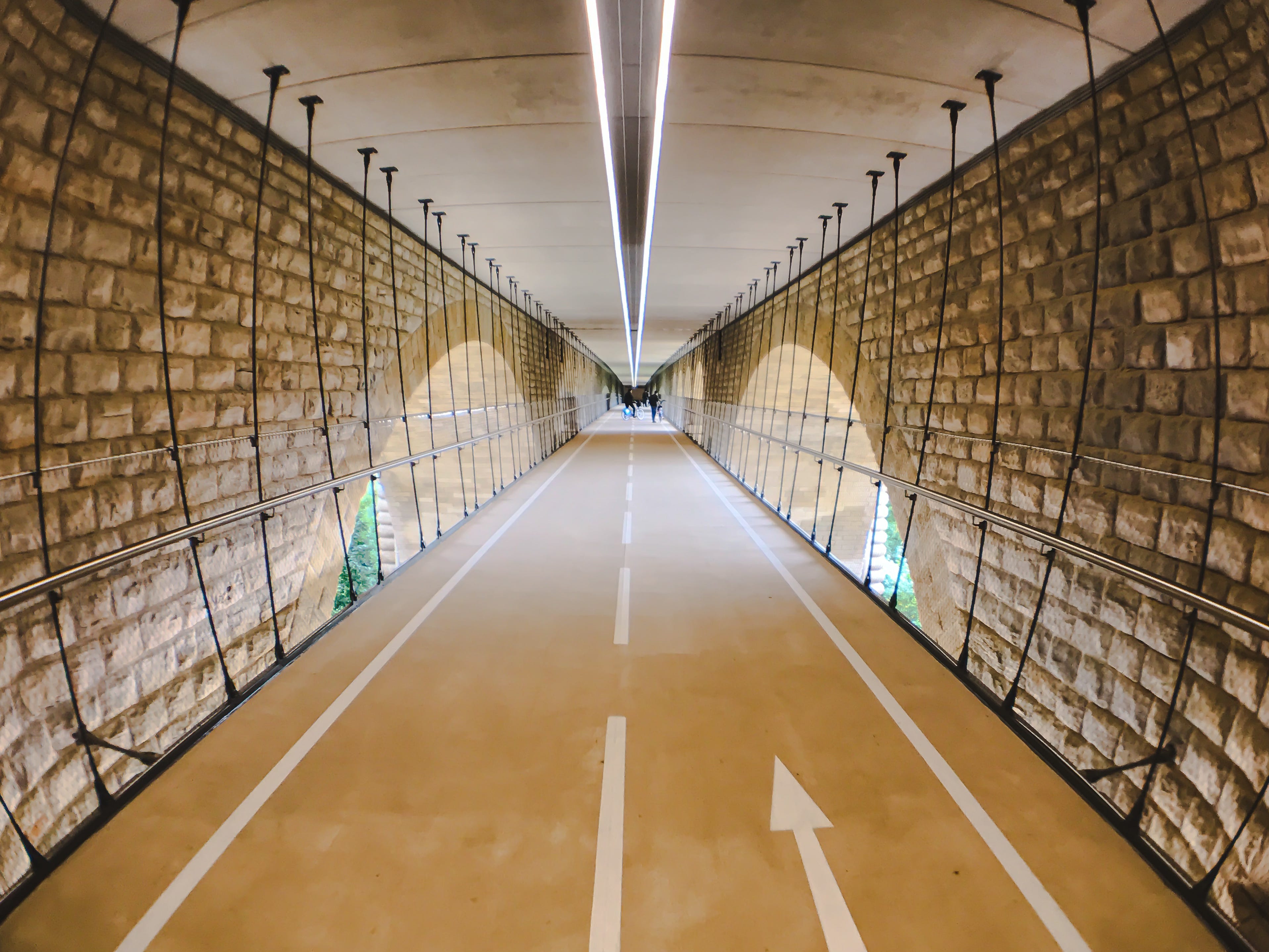
When we hear the term “tunnel vision,” we think of that loss of peripheral vision caused by speed, which narrows our view to just a small fraction of what lies ahead. I have my own version of that phenomenon. It serves as an example, though its scale is entirely different.
At the start of a journey, our luggage often includes everything our daily lives expect us to carry: possible futures, the myriad tiny obligations that collectively consume so much of us, messages from others, and a host of elements creating a kind of static—where, just as we begin to make out images and grasp the dialogue, everything becomes distorted.
It doesn’t always happen, but some journeys possess a magic that strips away all of that. Naturally, this takes time. It is a small transformation—one that occurs quickly, yet not instantaneously. Our first day on a trip that silences the noise isn’t necessarily surrounded by quiet; some of that baggage has barely left our suitcases and may even feel more present now, simply because it stands in isolation.
It is not physical distance alone that leaves problems—and their intrusive thoughts—behind. It is something more. The inertia that governs us loses its momentum, the logic that usually dictates our hours gives way, and the body—now present at its destination—takes control so naturally that it is surprising we are surprised to remember it.
Thoughts that were previously fixed on points along the horizon—dictated by an imposed speed—gradually fade away; it is not our vision that expands, but our attention. Details become sharp again: the rustle of leaves, the sun resting on an arm, or eyes gauging the strength of the wind.
It seems simple, yet the questions we brought with us shrink in significance. We have changed our world simply by slowing down. And this new perspective allows that invisible baggage to shed its weight, restoring our sense of scale and proportion—and, above all, helping us understand that while a journey may not solve everything, it can reorganize it all. Perhaps that is where the mind has finally caught up with the body, and both meet at the same point on the map. Without any tunneling effect, and with the lingering question of whether we were seeking a specific place or simply an open space from which to observe once more.
Good post!! I like your points of view