

The Elqui Valley’s Inner Telescope
Have you ever felt that unease of being in the wrong place, that yearning to escape?

This post was originally written by us in another language [here]. This English version was translated with Google Translate and lightly reviewed.
Have you ever felt that unease of being in the wrong place, that yearning to escape? I have. For years I thought the problem was the location: work, the city, the pace of life. That if I changed my surroundings, something inside me would settle. But inner turmoil doesn’t understand geography. It will follow me, whether I’m in the heart of the city or in the most remote spot. Being lost isn’t a matter of location. It’s a matter of perspective.
That search led me to Chile, to meet up with a friend, without a plan, simply seeking tranquility. From Coquimbo, we decided to visit the Elqui Valley in the heart of the Southern Hemisphere winter. The seasonal nature of tourism limited what was available: few places remained open, with a much smaller influx of visitors, and even meals had to be arranged to ensure supplies were available in remote locations. The valleys of central and northern Chile benefit from clear, dry skies—among the sharpest and darkest on the planet—; The climate was mild compared to the cold of the south, though to me it felt freezing. The Elqui Valley carries a mystical reputation: it’s called “the closest place to heaven.” Not in the folkloric sense. Its magic lies elsewhere: in its ability to take things away. The noise. The artificial light. The illusion that being busy is the same as being alive.
I’ve searched for that peace in countless places. I’ve rarely found it. And when I did, I noticed something I hadn’t expected: the best places gave me nothing. They took from me. The value of a place doesn’t lie in what it offers, but in what it deprives you of. It’s absence that strips the senses bare. That makes the experience so intense. So hard to forget.
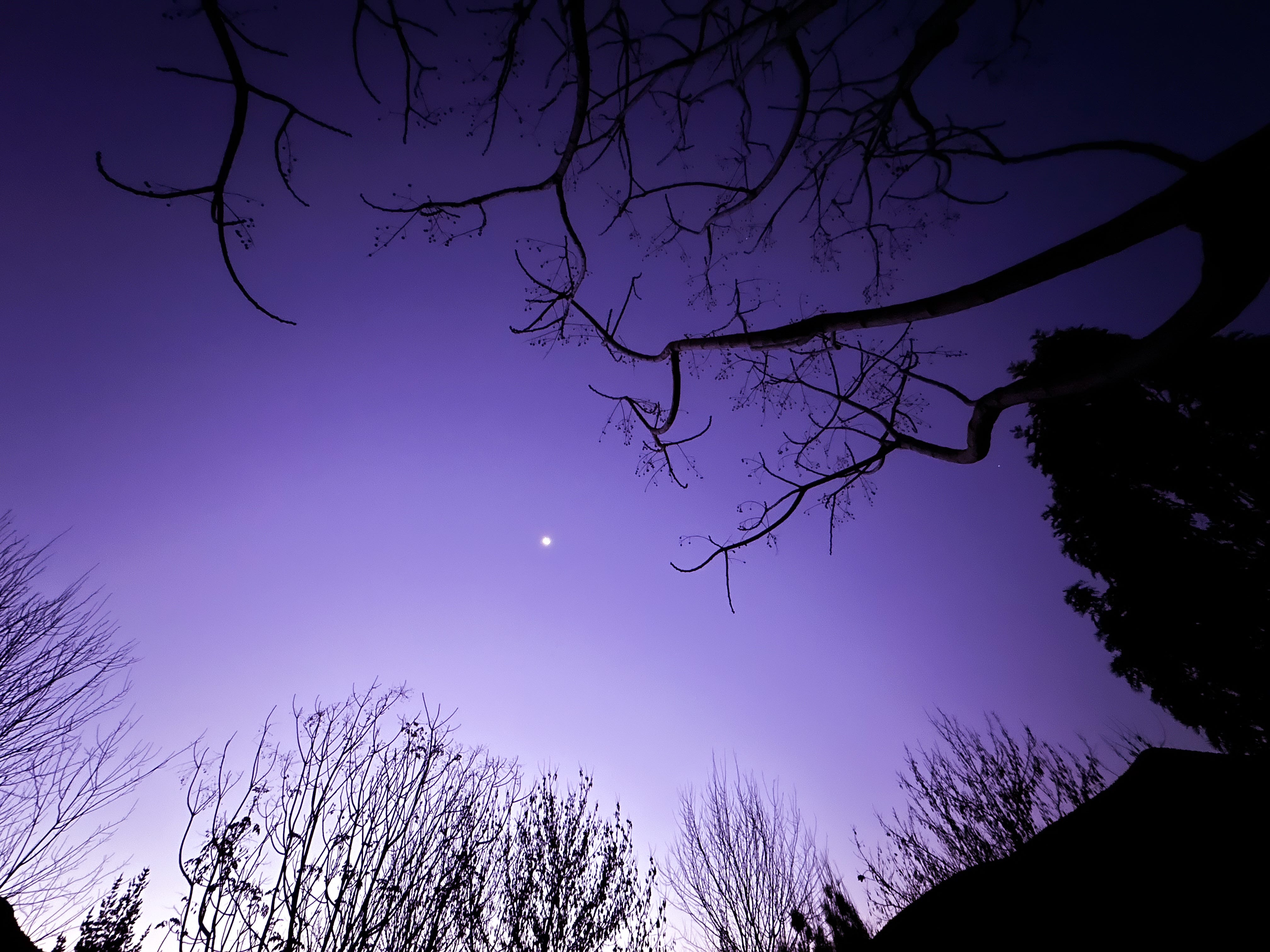
Lying on the ground, looking up, there’s a moment when the sky ceases to be decoration and becomes something that holds you. Thousands of stars. Millions of light-years traveling to reach your eyes right now, right here. We are vestiges of all that: tiny opals made of the same matter as the cosmos. And when that hits you—not as an idea, but as a physical sensation—something rearranges itself. Your to-do list, your fears, what someone told you on Tuesday: everything is reduced to its true value. Close to zero.
I expected silence and arrived at it unprepared. The silence of the Elqui isn’t calm. It’s a mirror. When the outside noise disappears, the inside volume rises in a way that almost hurts: the tasks I didn’t do, the resentment I didn’t process, the thoughts I promised to address and didn’t. The hustle and bustle of daily life—I know now—is my defense mechanism. A perpetual excuse not to look at myself. There was no excuse there. The silence forced me to bring to the surface everything I had been keeping bottled up. And I had to write it down. Not because I wanted to, but because I couldn’t not.
And then there’s the darkness. A real darkness, without streetlights, without screens, without the orange glow of the city filtering through the blinds. In that darkness, you can see. When was the last time you were truly in the dark? We mistake constant light for clarity. We live saturated with notifications, stimuli, requests—all urgent, all simultaneous—and that doesn’t illuminate: it blinds. The cost is being unable to distinguish what matters from the blurry background of what merely insists. Clarity isn’t accumulation. It’s elimination. When I turned off everything I could, the few lights that remained were the only ones that deserved my attention.
My mind is a mineral dance, an opalescent universe that has captured inner light, just as the cosmos contains it. I no longer believe I’m in the wrong place. I was using a magnifying glass to try to understand something that can only be seen through a telescope. When I confront my noise, my disorder, my excess of artificial light, that silence appears, uniting the immensity of the universe with my own tinyness. And in that proportion, everything fits.
It was in the Elqui Valley, among silent mountains and under that pristine sky, where all of this fell into place. Not because the place gave me anything. But because it took enough from me so that I could see myself. It’s a corner of the Earth that, by depriving me of the triviality of light and sound, gave me the true scale by which to measure the spirit. The greatest revelation doesn’t come from the outside. It comes when you manage to silence and order your inner microcosm until it reflects, even if only for an instant, the perfection of the cosmos.